
5-Minute Learning Games You Can Play Anywhere
By Leslie Dykstra · Certified Early Childhood Specialist · Williamson County, TN
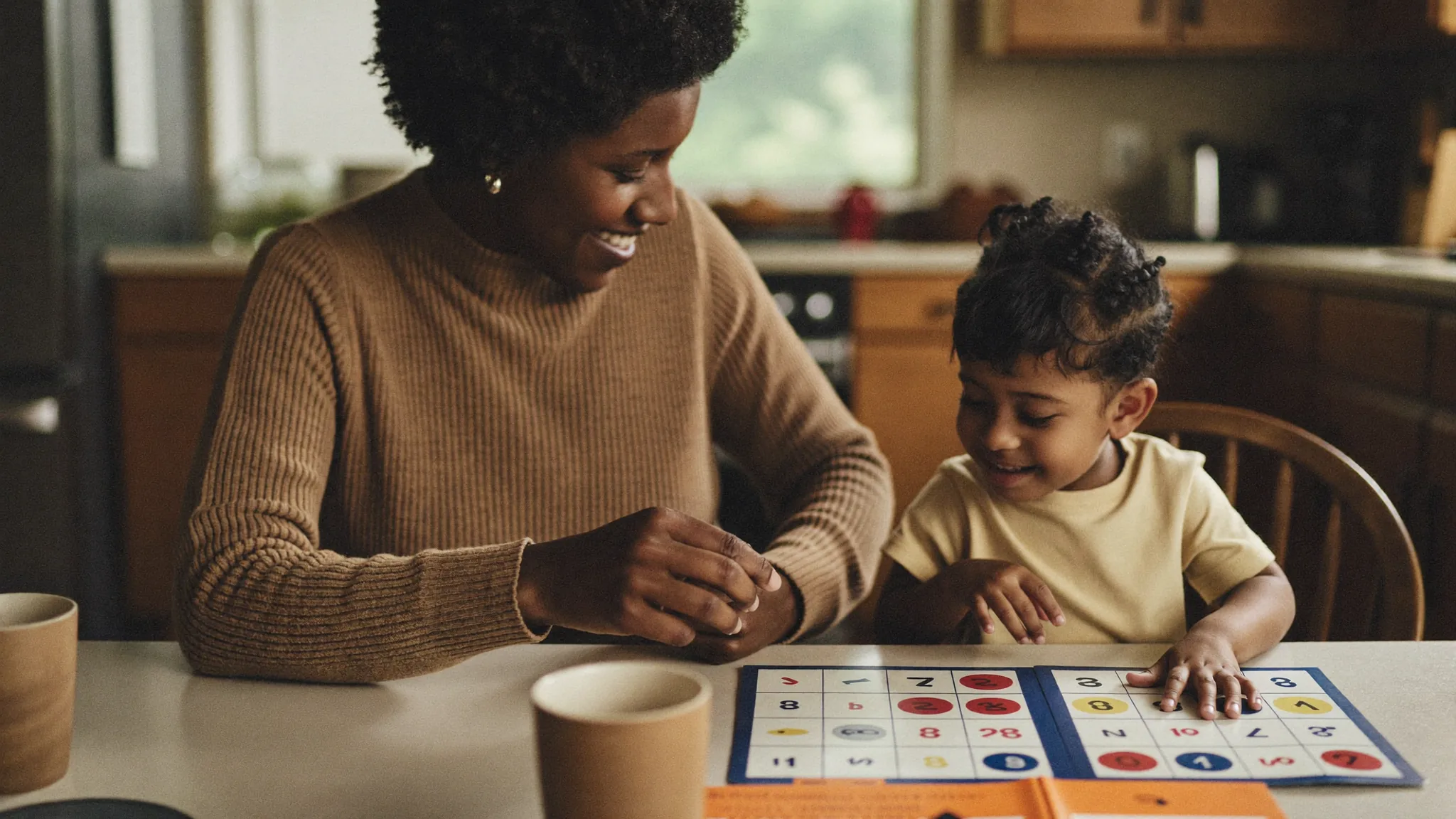
If you've ever sat in a waiting room watching your child bounce off the walls, this post is for you. As a certified early childhood specialist, one of my favorite things to share with parents is how much learning fits into small, ordinary moments. Quick learning games for kids don't require prep or a toy bag. They just need a willing adult and a few spare minutes.
Here in Williamson County, families are busy. These games are designed for the in-between spaces — the school pickup line, the doctor's waiting room, the ten-minute drive to swim lessons.
Why do quick games in ordinary moments actually matter?
Young children learn through repetition and conversation. Every short game you play with your child in a random Tuesday moment is adding to their mental library. Vocabulary grows one conversation at a time. Number sense grows one counting game at a time. These short bursts add up fast over a summer.
There's also a focus skill being practiced. Taking turns in a verbal game, holding a thought while they listen to you, answering a question — that's attention work. And attention is something many children need to build before kindergarten.
Car games (no supplies needed)
"I'm going on a trip" — Each person adds one item to the packing list, in order, repeating from the beginning. Builds working memory and keeps everyone occupied through a long light or a highway stretch.
Letter sound spotting — Pick a letter sound and spot things out the window that start with it. "Find something that starts with /b/." Phonics practice that feels like a treasure hunt.
What do you notice? — Pick something you pass (a barn, a billboard, a construction zone) and take turns saying one thing you notice about it. You're building observation skills and vocabulary without any workbooks.
"More or fewer?" — "Does a cow have more legs than a dog?" Easy for young children, and you can adjust the difficulty as they grow. Number comparisons are a core early math skill.
Waiting room and line games
Story chain — You say the first sentence of a made-up story. Your child adds the next. You add the next. Keep going until you're called. Creativity, listening, and oral language all in one.
Rhyme time — Say a word, they find a rhyme. Make it silly. Rhyming is one of the strongest predictors of early reading success, and children love making nonsense words that still follow the pattern.
20 questions (simplified) — Think of an animal. Your child asks yes/no questions to guess it. Even a four-year-old can do a version of this. Critical thinking and question-forming, right there in the pediatrician's office.
Shape and color patterns — "I see red, blue, red, blue — what comes next?" or "Name everything in this room that is a rectangle." Pattern recognition and geometric thinking, hidden in a quiet game.
Kitchen and grocery store games
Price comparisons — "This box costs two dollars, that one costs three. Which one is more? How many more?" Real numbers in real context land better than worksheets for many children.
Category sorting — At the grocery store, ask your child to put all the vegetables together, then the fruits. Sorting and categorizing is an early math foundation. It's also genuinely helpful.
Label reading — Show your child the first letter of a food label and ask what sound it makes. Even children who aren't reading yet can connect letters to sounds. That's phonics in action.
For more ideas on building early reading habits into daily life, take a look at how to read aloud to your child — it's full of specific, practical strategies.
How do I know which games fit my child's level?
The easiest rule: if your child gets it right almost every time, make it a little harder. If they're frustrated, back up. Good learning games feel just a little bit challenging — not too easy, not overwhelming.
For children ages 3–4, keep games to one step and concrete answers. For ages 5–6, add memory, sequence, and rhyme. For ages 7–8, comparisons, categories, and longer chains work well.
If you'd like a more specific picture of where your child is and what games would suit them best, our free Kindergarten Readiness Checklist is a great place to start. You can also book a free 15-minute consultation with me — we'll talk through exactly what your child needs this summer.
Frequently asked questions
Do these games really make a difference, or are they just fun?
Both, and that's not a contradiction. For young children, enjoyment is how learning sticks. A game that gets played over and over does more than a worksheet done once.
My child doesn't want to stop and play a game. What do I do?
Start with the ones that feel most like conversation — the car games work well because there's nothing else to do. Keep it short, keep it low-stakes. One question can become a game without your child even realizing it.
What age do these work for?
Most of these games work for ages 3–8 with small adjustments for complexity. Younger children do best with one-step, concrete games. Older children enjoy more challenge and silliness.
Looking for more support this summer?
Whether your child is getting ready for kindergarten or just finishing second grade, there's a program designed for them at Little Minds, Big Futures. Explore programs for ages 3–8 or book a free call with Leslie. Where every child's potential takes flight.