The Best Educational Toys for Ages 3–8 (That Actually Build Skills)
By Leslie Dykstra · Certified Early Childhood Specialist · Williamson County, TN
Every few months I get asked a version of the same question: "What should I be buying for my child that will actually help them learn?" It's a good question, and I love answering it. Because the answer is simpler than the toy aisle makes it look.
As a certified early childhood specialist working with children ages 3–8 in Williamson County, I've seen which materials actually move the needle — in sessions, in homes, and in schools. The best educational toys for ages 3–8 share a few traits: they're hands-on, they work in multiple ways, and children come back to them at different ages and use them differently each time.
Here's what I recommend and why.
What makes a toy actually educational?
Before the list: a toy isn't educational because the packaging says so.
The real markers are whether a child has to think while using it. Whether it asks them to plan, adjust, compare, or problem-solve. Whether it works their hands alongside their minds. A child playing freely with open-ended materials is often doing more developmental work than a child pressing buttons on an electronic "learning" toy.
Look for things that:
- Can be used more than one way
- Don't have a single right answer baked in
- Encourage the child to stay engaged, not just watch
- Work the hands as well as the mind
With that framing, here are the categories I return to again and again.
Building blocks
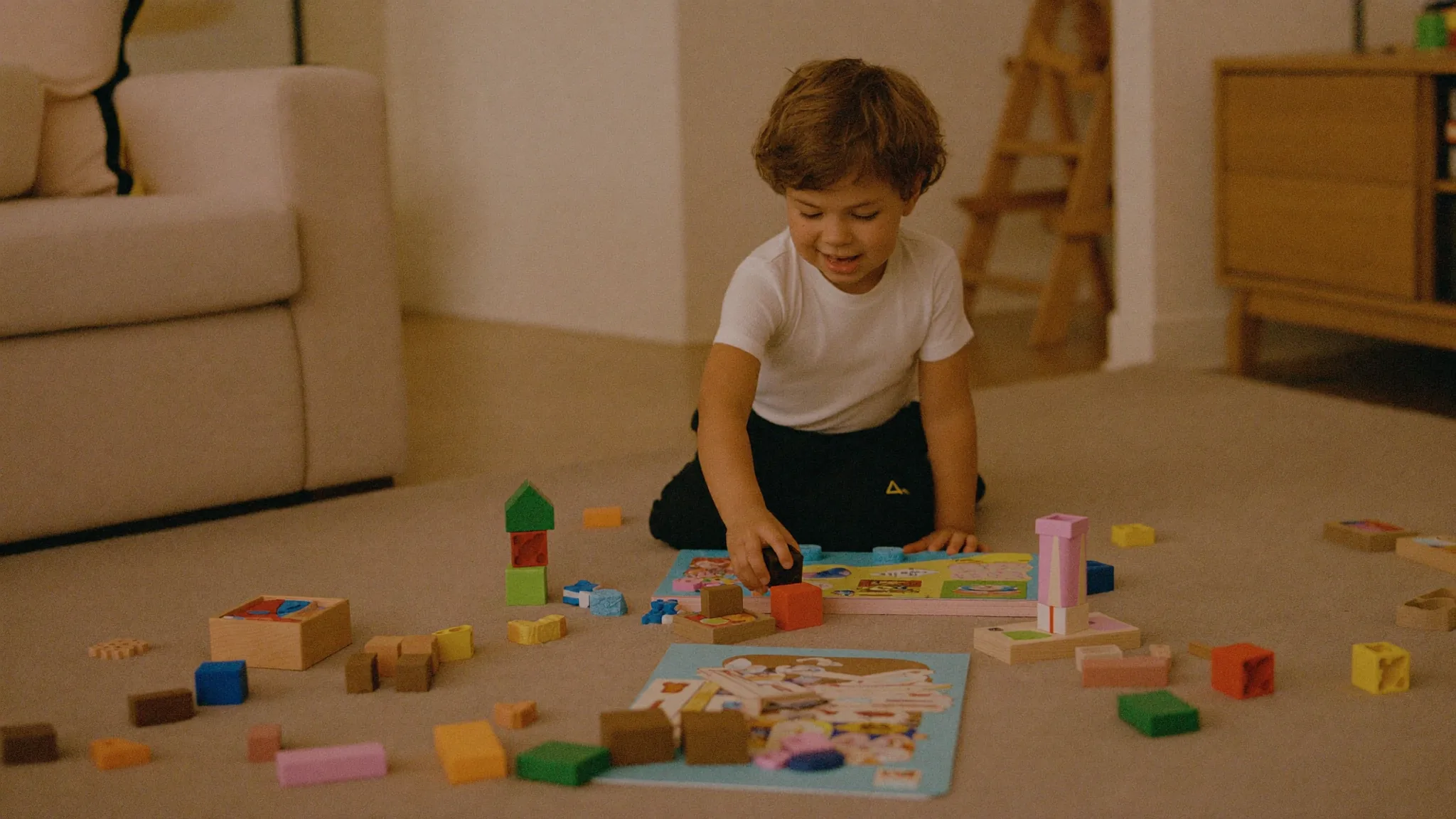
Classic unit blocks — the plain wooden kind — are one of the most powerful early learning materials ever made. Children who play with blocks are doing real spatial reasoning, physics, and early math. They're sorting, balancing, estimating, and planning.
Blocks also build fine motor strength. Placing and stacking small pieces requires the same kind of hand control that holding a pencil does. That connection is real, and I see it in the children I work with.
For younger children (ages 3–4), large soft or foam blocks are great. For ages 5 and up, smaller wooden or plastic interlocking sets give more precision.
Puzzles
Puzzles deserve more credit than they get. A good puzzle builds spatial reasoning, problem-solving, and persistence. For very young children, chunky peg puzzles work the hand grip needed for writing. For ages 5–8, interlocking floor puzzles and framed puzzles with 24–100 pieces offer a range of challenge.
The key is choosing a puzzle that's just a little hard. Too easy and a child loses interest. Too hard and they give up. That sweet spot — where they have to think but can succeed — is where real growth happens.
Magnetic tiles
Flat magnetic tiles that snap together are one of those materials children use differently at every age. At three, they're stacking and connecting. At five, they're building houses and towers. At seven, they're creating bridges and experimenting with symmetry.
Magnetic tiles build spatial thinking, encourage creativity, and develop the kind of mental rotation skills that show up later in geometry. They're also genuinely fun, which matters — children don't learn well from toys they don't want to touch.
Play dough
Play dough is one of the most underrated fine motor tools there is. Rolling, pinching, pressing, shaping — all of it strengthens the small muscles of the hand that a child needs to write, cut with scissors, and manage a pencil.
For ages 3–5 especially, regular play dough sessions make a measurable difference in hand strength and control. You can make it at home with pantry staples, or buy it ready-made. Either way, it's worth keeping on the shelf.
If fine motor development is something you want to understand better, the programs at Little Minds, Big Futures include hands-on writing foundations work for ages 3–8.
Bead mazes
These are the tabletop toys with colorful beads strung along twisted wires. They might look simple, but for ages 2–4 they're doing important work. Following the wire with a bead requires sustained attention, hand-eye coordination, and the kind of deliberate hand movement that prepares a child for writing.
Look for one with varied wire paths and different bead shapes. Once a child can move the beads smoothly and purposefully, they've built real control.
Pattern blocks
Flat geometric shapes — triangles, hexagons, diamonds, squares — that children arrange into pictures and designs. Pattern blocks teach shape recognition, symmetry, spatial thinking, and early fractions (three triangles make one hexagon).
They're quiet, they travel well, and children ages 4–8 all use them meaningfully, just in different ways. Younger children fill in pre-made pictures. Older children create their own designs and start noticing which shapes fit together and why.
You can find free printable pattern block mats online and keep the blocks on the shelf for years.
A quick note on screens
No screen-based tool makes this list. That's intentional. For children under 8, physical, hands-on play is where real skill development happens. Screens can supplement learning, but they rarely build the fine motor, spatial, or social skills that hands-on materials do.
Frequently asked questions
Do I need to buy expensive versions of these toys?
Almost always, no. Wooden blocks, simple puzzles, and pattern blocks can often be found at discount stores, thrift shops, or through your local library's toy lending program. Quality matters more than brand name.
My child won't sit still for puzzles. What should I try?
Start with very short sessions — three minutes is fine. Choose a puzzle that's easy enough to feel quick success. And sit with them. Children often stay engaged longer when a parent is right there, even if you're just watching. If attention is a consistent concern, a personalized assessment can help sort out what's going on.
How do I know if a toy is age-appropriate?
The best guide is whether your child can use it with a little effort but still have success. If it takes no thought, they'll be bored quickly. If it's so hard they can't make progress, they'll walk away frustrated. Choose materials where they can mostly succeed with occasional challenge.
Want to know which skills your child is building?
The free Kindergarten Readiness Checklist covers fine motor, early math, literacy, and more — all the areas these toys support. Download it and use it alongside your toy shelf.
Or if you'd like a one-on-one look at where your child is and what would help most, book a free 15-minute conversation with Leslie.
Little Minds, Big Futures — where every child's potential takes flight.