
My Child Memorizes Books but Can't Actually Read — What Now?
By Leslie Dykstra · Certified Early Childhood Specialist · Williamson County, TN
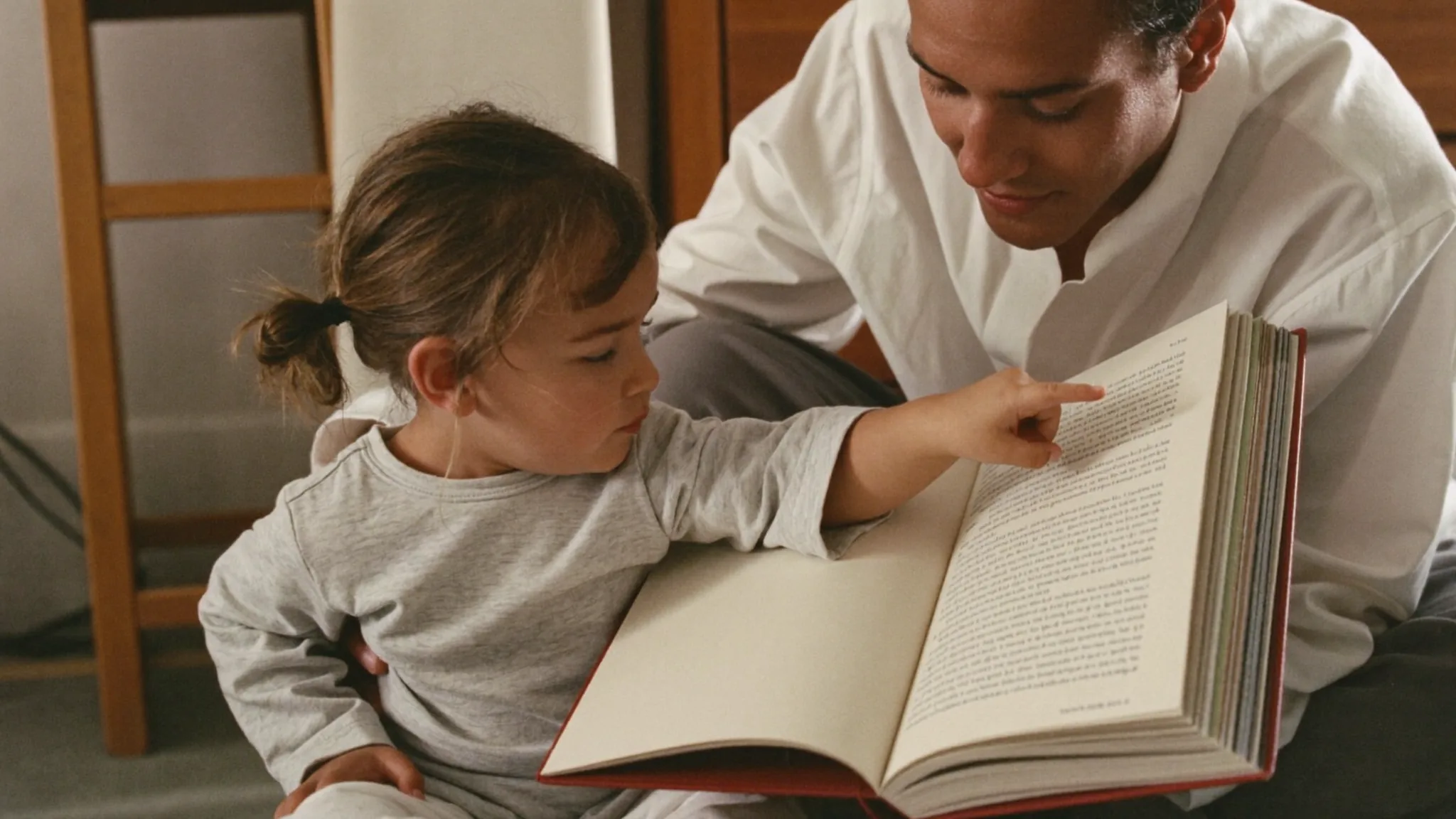
If your child can recite The Very Hungry Caterpillar from cover to cover but stumbles when you point to a word on a different page, you've probably felt that unsettled feeling. Something seems a little off. You're right to notice it. And I want to reassure you: this is one of the most common things I see as a certified early childhood specialist serving families in Franklin and across Williamson County.
Your child is not "bad at reading." They've just learned a very good workaround.
Why do kids memorize books instead of reading them?
Young children love patterns and repetition. When you read the same book dozens of times, a child's brain files it away — the rhythm, the pictures, the sequence of events. Then they "read" it back by pulling from memory rather than from the actual words on the page.
This is completely normal at ages 3 and 4. Children who are developing well often go through a phase where they pretend-read familiar books, and that's a sign their memory and story-sense are healthy.
The concern comes when a child is 5, 6, or 7 and the memorization strategy is still covering up the fact that they haven't cracked the code of how print actually works. That's when the workaround becomes a roadblock.
What's the difference between memorizing and actually reading?
Actual reading requires what reading specialists call decoding — understanding that letters represent sounds, and that blending those sounds together gives you a word. It's a specific skill. It can be taught directly.
Memorization uses the pictures, context, and memory to "predict" what the words probably say. For familiar books, it works perfectly. For any new text — a menu, a sign, a book they haven't seen — it fails.
Here's an easy way to test it at home: cover the pictures on a familiar page and point to one word. Ask your child what it says. If they can sound it out, great. If they look around for visual clues or guess based on context, they're relying on memory rather than decoding.
That test tells you where to focus next.
What should I do now?
The goal is to help your child build decoding skills alongside the memory skills they already have. A few starting points:
- Introduce letter-sound work explicitly. Learning the sounds that letters make is the foundation. Short, playful sessions work better than long sit-down lessons. A few minutes a day adds up fast.
- Try decodable books. These are books designed so a child can sound out most words using just the phonics patterns they've already learned. They're different from picture books. (Here's a post on decodable books vs. leveled readers if you want to learn more.)
- Point while you read. When you read together, track the words with your finger. This builds the connection between the spoken word and the printed word — a connection that memorizers often haven't made yet.
- Keep reading aloud together. Don't stop reading to your child while you work on decoding. Hearing fluent reading builds vocabulary and comprehension. (Here's how to make read-aloud time count.)
When should I get extra help?
If your child is heading into first grade and phonics practice at home isn't sticking, it may be time to look more closely. Some children need explicit, structured phonics instruction that goes beyond what a busy parent can fit into a day. That's not a failure — it's just a match problem. The right support can move things quickly.
A personalized assessment can tell you exactly which phonics skills your child has and which ones are missing. From there, sessions can fill in those gaps in a clear sequence rather than guessing at what to try next.
You can also check the Kindergarten Readiness Checklist to see where your child's pre-reading skills currently stand.
Frequently asked questions
Is memorizing books a problem, or is it a good sign?
At ages 3–4, it's a great sign — it means your child loves books and has a strong memory. At ages 5–7, if it's the only strategy available, it becomes something to address. Both things can be true.
My child's teacher says they're reading on grade level. Should I still be concerned?
If your child is keeping up in class, that's a positive sign. But if your instinct says something feels off about how they're reading, it's always okay to ask for more information or get a second look. A personalized assessment gives you specifics that a grade-level check might miss.
How long does it take to build real decoding skills?
It varies, but children who get consistent, structured phonics practice often make noticeable progress within a few weeks. The key is consistency and the right sequence of skills.
Want to know exactly where your child's reading skills stand?
A free 15-minute conversation is a good place to start. Book yours here, and we'll figure out together what your child needs next.
Little Minds, Big Futures — where every child's potential takes flight.