
Screen Time and Early Learning: How Much Is Too Much?
By Leslie Dykstra · Certified Early Childhood Specialist · Williamson County, TN
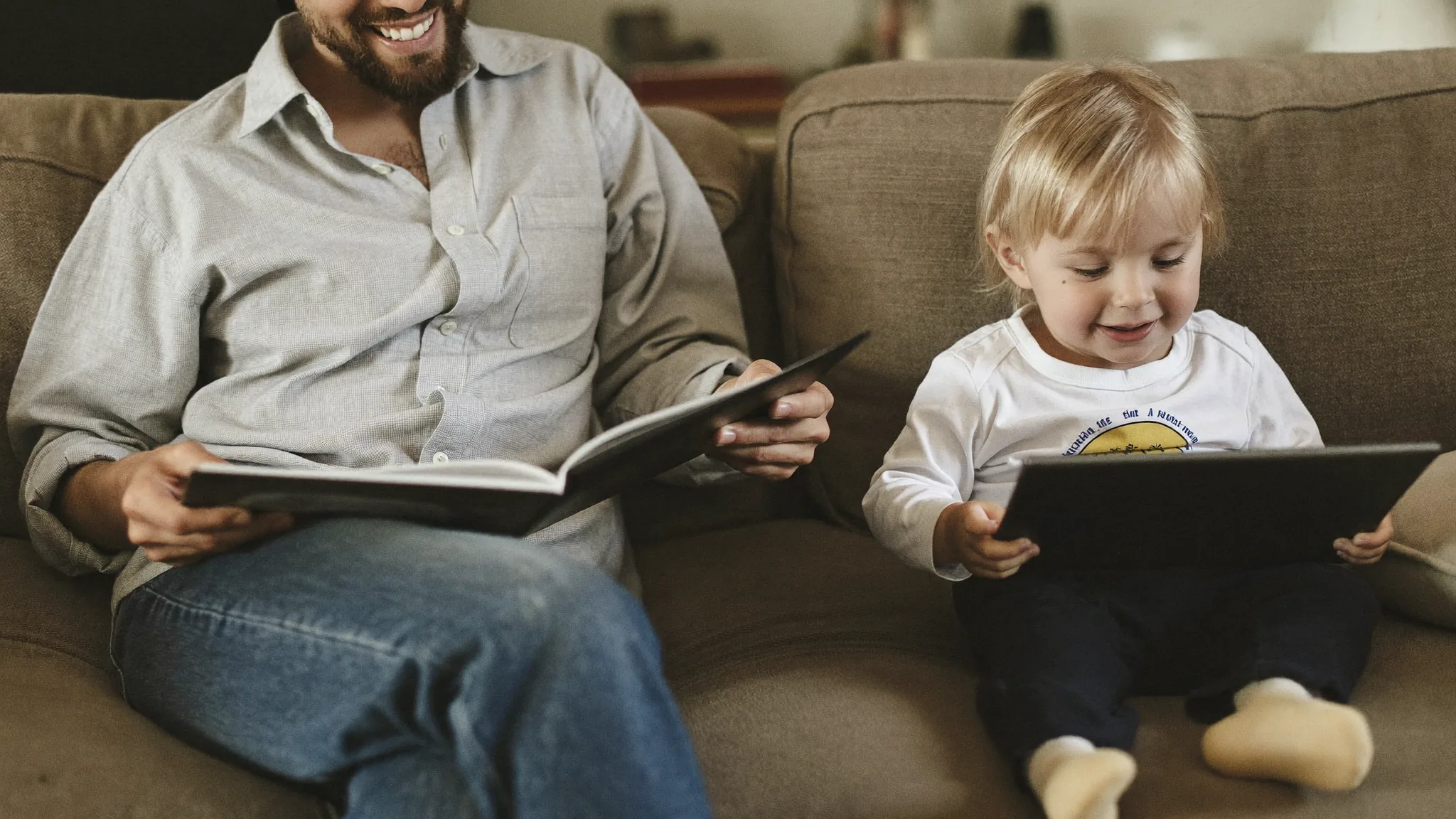
If you've ever handed your toddler a tablet to get five peaceful minutes, I want you to know: you are not a bad parent. Every family I work with across Williamson County has navigated this exact tension. Screen time and early learning can coexist when families are thoughtful about what's on the screen and how it's used. As a certified early childhood specialist, I've seen children who watch very little television and children who watch more — and the difference rarely comes down to the screen itself. It comes down to everything else around it.
How much screen time is actually too much?
Pediatric guidelines have shifted over the years, and the current thinking is more nuanced than a single number. Here's a general framework that makes sense developmentally:
- Under 18 months: Video calls with family are fine. Other screen use offers very little benefit at this age and is worth limiting.
- 18–24 months: If you introduce it at all, watch with your child and talk about what you see.
- Ages 2–5: About one hour a day of high-quality programming, with a grown-up nearby when possible.
- Ages 6 and up: Consistent limits that still leave room for sleep, movement, reading, and play.
These are starting points, not verdicts. A hard week, a sick day, a long road trip — life happens. The goal is the pattern over time, not perfection on any single afternoon.
Does screen time hurt early learning?
It can, when it replaces things that young children need most. Little ones build language through conversation, not passive watching. They build fine motor skills through blocks and crayons and play dough, not touchscreens. They build focus through stories and open-ended play, not short fast-cut videos.
When screen time crowds out those experiences hour after hour, day after day, that is when early learning takes a hit.
The good news is that screen time alone is rarely the root cause of a learning concern. If you're noticing your child is behind in reading or language, a personalized assessment can show you what's actually happening and what to do about it.
What should I look for if we do use screens?
Not all screen time is equal. When screens are part of your day, these choices tend to serve young learners better:
- Slow pacing. Fast cuts and constant sound effects can wear out a young child's attention. Slower, conversation-based shows give their brains time to process.
- Language-rich content. Shows where characters ask questions, name things, and explain their thinking are better for language growth than action-only content.
- No background TV. A television on in the background, even without anyone watching, disrupts a child's play and conversation. When it's on, give it your attention or turn it off.
- Co-viewing when you can. Sitting with your child and talking about what you see together — "Oh, what do you think that caterpillar is going to do?" — turns passive watching into real learning.
What does good balance actually look like?
Balance means that screens are one small part of a day that also includes reading together, outdoor time, creative play, and real conversation. Here in Williamson County, we are lucky to have libraries, parks, and green spaces where children can move and explore freely. (If you want ideas for free local spots, check out learning activities around Williamson County TN.)
A few rhythms that help:
- Keep screens off during meals and the hour before bed.
- Have a "screens-off" morning routine where reading or play comes first.
- When your child finishes screen time, do something together — even a ten-minute walk resets them quickly.
And on the days none of that happens? That is okay. One off day does not define your child's development. What you do most days does.
What about educational apps?
Some apps do offer genuine learning practice — phonics games, number recognition, letter tracing — and can be useful short supplements. The key word is supplement. An app cannot replace the back-and-forth of a real conversation, a read-aloud session, or hands-on counting with real objects. If you'd like help choosing tools that actually match where your child is, that is exactly the kind of thing we can talk through in a free 15-minute consult.
Frequently asked questions
My child watches two hours a day. Should I be worried?
Not automatically. Look at the rest of the day. Are they getting read to? Do they play independently? Are they sleeping well and moving their bodies? If yes, two hours of quality content is not likely causing harm. If screens are eating into sleep, reading, or outdoor time, it's worth adjusting.
Are tablets better or worse than TV for young kids?
Touch-based devices can encourage more active participation than passive TV — but they also make it easier for children to seek out faster, more stimulating content. Watch what they gravitate toward and set up parental controls that keep content age-appropriate.
My child only calms down in front of a screen. Is that a problem?
It is worth noticing, but not panicking about. Children who struggle to self-regulate often find screens calming because they remove the demands of the social world. Building other calm-down tools — books, a quiet corner, simple sensory play — helps over time. If the concern feels bigger than that, reach out and we can point you toward the right support.
Want help seeing the full picture of where your child is?
Screens are one small piece of the early learning story. If you have questions about kindergarten readiness, grab the free 25-point Kindergarten Readiness Checklist or book a free 15-minute conversation with Leslie. Little Minds, Big Futures — where every child's potential takes flight.