
What Should a Child Know Before Starting Kindergarten?
By Leslie Dykstra · Certified Early Childhood Specialist · Williamson County, TN
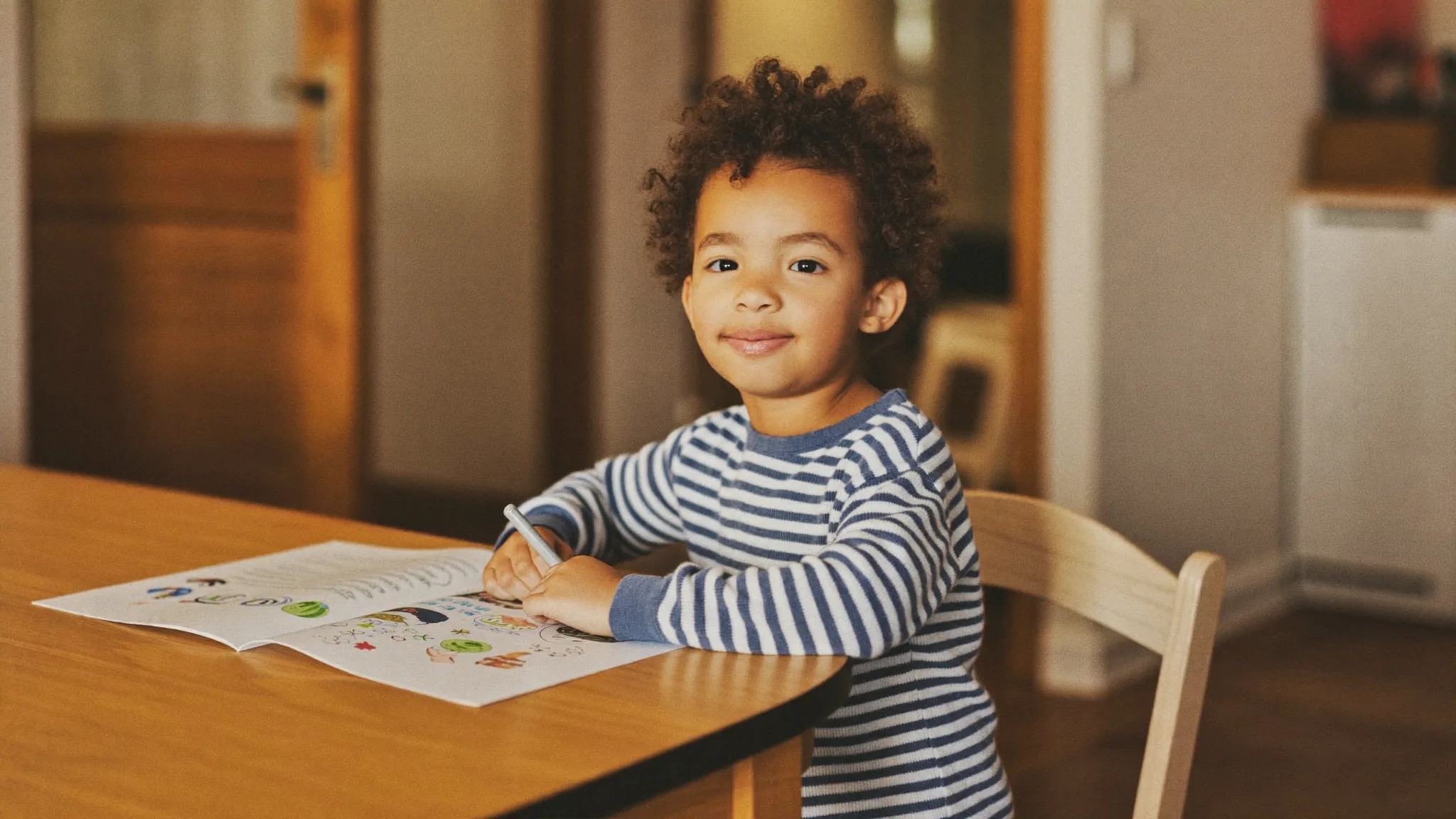
Parents in Franklin, Brentwood, and across Williamson County start asking this question around this time every year, and I'm glad they do. Kindergarten readiness isn't about drilling flashcards or hitting a specific test score. It's about making sure your child has the building blocks that let them grow from their first week in school — not spend those first weeks catching up.
I'm Leslie Dykstra, a certified early childhood specialist, and I work with children ages 3–8 to prepare them for exactly this transition. Below is the clearest picture I can give you of what matters and why.
What literacy skills should a child have?
Literacy readiness is more than knowing the alphabet. Here's the progression that matters:
Print awareness. Does your child know that books are read left to right? That the words on the page — not the pictures — are what you're reading? This sounds basic, but many children arrive in kindergarten without it.
Letter recognition. Most kindergartens expect children to recognize the letters of the alphabet by sight. Capital letters first, then lowercase. Your child doesn't need to read yet, but recognizing letters gives teachers a foundation to build on quickly.
Beginning phonics awareness. Can your child hear that "bat" and "ball" both start with the same sound? Can they clap the syllables in their name? These phonological skills are the entry point for learning to decode words. Children who arrive with this awareness tend to take off as readers quickly.
Interest in stories and books. A child who loves books — who asks questions, notices details, and wants to know what happens next — is already reading-ready in the most important way.
If phonics is an area you're thinking about, the post on what order to teach phonics gives a helpful breakdown of the sequence.
What math skills matter before kindergarten?
Early math readiness is about understanding, not just reciting.
Counting with meaning. Can your child count a small group of objects and tell you how many there are? This means touching each one and stopping at the right number — not just saying the words.
Comparing quantities. Do they know that seven is more than four? Can they look at two groups and tell you which has more, without counting every item?
Basic shape and pattern recognition. Circles, squares, triangles, rectangles. Simple AB patterns (red, blue, red, blue). These are standard kindergarten starting points.
Sorting and grouping. Can your child sort toys by color, or separate big from small? This kind of thinking is the foundation of mathematical categories.
For a deeper look at early math, the posts on number sense for kindergarten and counting vs. understanding numbers walk through each concept in detail.
What about fine motor and writing readiness?
Fine motor skills often get overlooked in the readiness conversation, but they matter a great deal. Kindergarten involves a lot of handwriting, cutting, and small-muscle work that tires out unprepared hands quickly.
Before kindergarten, it helps for a child to be able to:
- Hold a pencil or crayon with a functional grip (fingers, not fist)
- Color or draw with some intention and control
- Use a pair of child scissors to make basic cuts
- Manage buttons, zippers, and snaps on their own clothing
If your child's hand control still feels shaky, there's time to help — and hands-on tools like play dough and puzzles can make a real difference. Our programs include fine motor and writing foundations work for children ages 3–8.
What social and independence skills does kindergarten expect?
Academic readiness gets most of the attention, but teachers will tell you that social and self-management skills matter just as much.
Children who do well in the first weeks of kindergarten can usually:
- Follow two-step directions ("Put your backpack away and sit at the circle")
- Manage personal needs independently — bathroom, getting a drink, putting on a coat
- Separate from a parent without extended distress
- Take turns and share in a group setting
- Express basic needs with words rather than behavior
None of these need to be perfect. But a child who has practiced these routines at home or in preschool will feel more confident on day one.
The fastest way to see the full picture
I've pulled together a free 25-point Kindergarten Readiness Checklist that walks through all five of these areas — literacy, math, fine motor, social readiness, and independence skills. It's designed for parents, written in plain language, and takes about ten minutes to go through.
Grab it here: Kindergarten Readiness Checklist.
If you go through it and find gaps, that's not a reason to worry. It's a starting point. Most readiness gaps can be meaningfully addressed with consistent, targeted practice between now and fall.
Frequently asked questions
My child is starting kindergarten in eight weeks. Is it too late to prepare?
Eight weeks is a real window. You can make meaningful progress in phonics awareness, early math understanding, and fine motor skills in that time with focused daily practice. A short assessment now tells you exactly where to put the effort. It is not too late.
My child knows everything on this list. Is she ready for sure?
Academic readiness is one piece. The social and independence skills matter just as much in the first weeks of school. Run through the full checklist — or book a conversation with Leslie — to see the complete picture.
My child has some gaps. What's the best next step?
Download the checklist and note which areas are strongest and which need more time. Then decide whether you'd like to address them at home or with some targeted support. A free 15-minute consultation can help you figure out the best plan for your child specifically.
Don't guess — know.
The free Kindergarten Readiness Checklist gives you a clear picture across every readiness area. Download it today, and if you'd like to talk through what you find, Leslie offers a free 15-minute consultation for families across Williamson County.
Little Minds, Big Futures — where every child's potential takes flight.