
Can Your Child Say the Alphabet Without the Song? The LMNOP Test
By Leslie Dykstra · Certified Early Childhood Specialist · Williamson County, TN
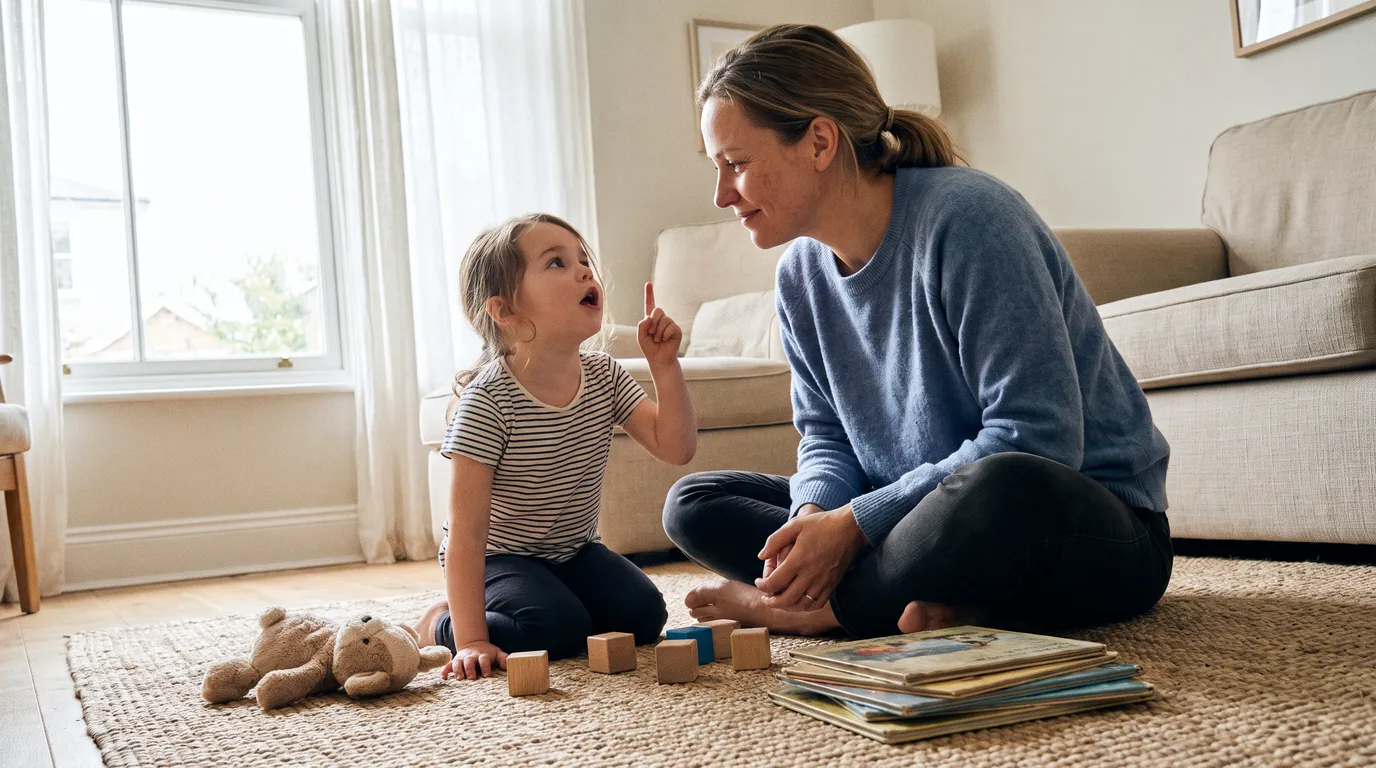
Have you ever listened to your kids sing the alphabet without the music? Do they stop and get stumped after letter M? Do they skip five letters? Do they repeat letter M two times?
Believe it or not, I've taught so many students who struggle with this skill. There is a big correlation between being able to say the alphabet letters consecutively and letter knowledge. For example, if your child says "LNP" instead of "LMNOP," they most likely are struggling with those letters — both recognizing them and knowing their sounds.
Why the song can hide what your child knows
The ABC song is wonderful — it's often a child's very first introduction to letters! But the tune moves fast in the middle. L-M-N-O-P gets sung so quickly that many little ones hear it as one long word: "elemeno." They aren't thinking of five separate letters at all. They're singing a sound.
That's why a child can sing the whole song perfectly and still not know what an M looks like. It's the same thing that happens when children memorize a favorite book instead of reading it — the memory is impressive, but it isn't the skill yet. Take the music away, and you get a much clearer picture of what your child truly knows.
Try the LMNOP test tonight
This takes about one minute, and it works best when it feels like a game, not a quiz.
- Ask for the "talking alphabet." "Can you say the ABCs to me — no singing, nice and slow, like a robot?"
- Just listen. Don't correct or help along the way. Let them get all the way to Z (or as far as they can).
- Jot down where they stumbled. Which letters were skipped, squished together, repeated, or followed by a long pause?
Here's what to listen for:
- Getting stuck after M: they need the tune to "carry" them into the next part.
- Skipping a chunk of letters: often L through P, or the run from Q to V.
- Repeating a letter: like saying M twice to fill the gap where the song's rhythm used to be.
- "LNP" or "elemeno": a sign those middle letters are still one blurry sound.
None of these are reasons to worry. They're clues! And clues are exactly what we need.
My job is to be the detective
My job is to be the detective and find out exactly what your student is struggling with and how I can help them build a strong phonics foundation. A stumble in the alphabet is rarely just about the alphabet. It usually points to specific letters your child can't yet recognize by sight or connect to a sound — and those are the building blocks of everything that comes next, from sounding out CVC words to reading their first books.
Once we know which letters are fuzzy, practice can be short, targeted, and fun — instead of drilling all 26 when your child already knows 20 of them.
How to help at home
- Slow the song way down. Sing it at half speed and give L, M, N, O, and P each their own beat. Clap once per letter.
- Point while you say it. Use an alphabet strip, a puzzle, or magnetic letters on the fridge, and touch each letter as you say its name. Now the sound is attached to a shape.
- Pull out the tricky letters. Pick the two or three your child stumbled on and play with just those this week: find them on cereal boxes, street signs, and book covers.
- Make it a game. A round of alphabet bingo is a sneaky, giggly way to practice recognizing letters out of order.
Then try the talking alphabet again in a week or two. You'll likely hear the difference!
Frequently asked questions
Why does my child say "elemeno" instead of L-M-N-O-P?
In the classic alphabet song, L-M-N-O-P is sung so quickly that it sounds like one long word. Many children learn it as a single sound, "elemeno," without realizing it's five separate letters. When they say the alphabet without the music, those letters often get squished, skipped, or repeated — a clue that they may not yet recognize L, M, N, O, and P on their own.
Does singing the alphabet mean my child knows their letters?
Not necessarily. Singing the ABC song is a memorized tune, a bit like memorizing a favorite book. Knowing letters means your child can say each letter in order on its own, point to it, name it, and connect it to its sound. Asking your child to say the alphabet slowly without the music is a quick way to see the difference.
At what age should a child say the alphabet without singing?
Many children can recite the alphabet in order without the tune somewhere between ages 4 and 5, often around the start of kindergarten. Every child develops at their own pace, so a stumble at 3 or 4 isn't a red flag — it simply shows you which letters to practice together. For a bigger picture, my free kindergarten readiness checklist walks through letter recognition and the other skills that matter most.
Want a detective on your child's side?
Book a free 15-minute consultation with Leslie to talk about where your child is and which letters and sounds would help them most. Little Minds, Big Futures — where every child's potential takes flight.